

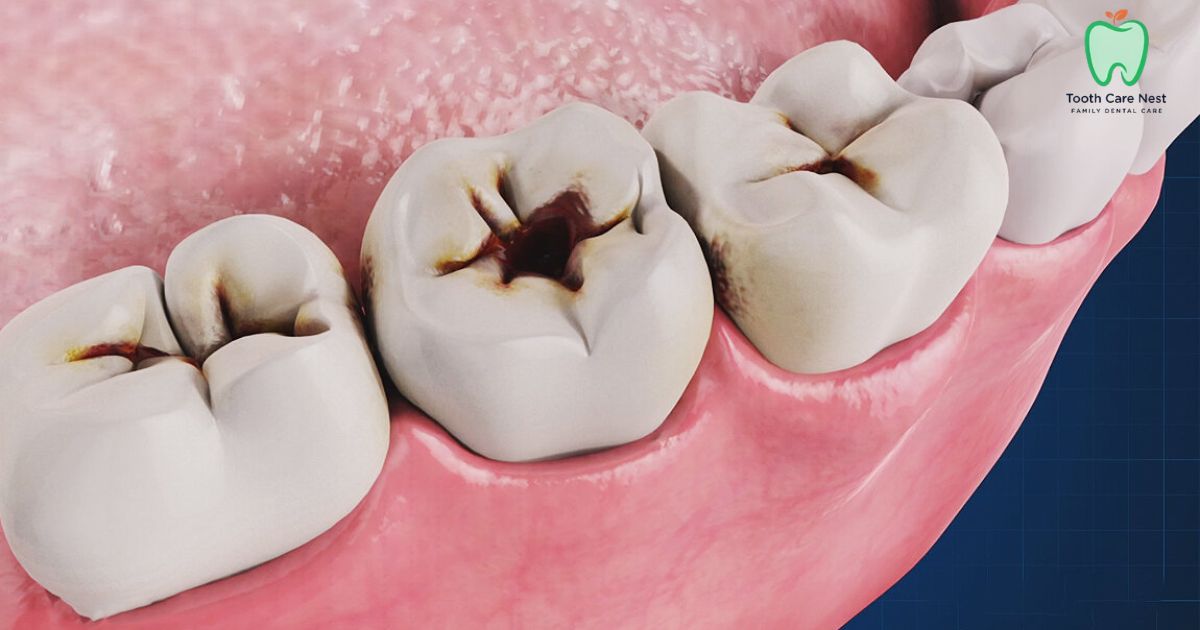
Cavity on Side of Tooth: A cavity on the side of a tooth can develop when plaque and bacteria build up between teeth or along the gumline. It may first appear as a small dark spot, rough area, or sensitivity when eating or drinking hot, cold, or sweet foods.
Treatment depends on how deep the decay is. Early cavities may be managed with fluoride and improved oral hygiene, while larger cavities often require a dental filling. Regular brushing, flossing, dental checkups, and limiting sugary foods can help prevent cavities from getting worse or returning.
Trending Today :Black Gums: Causes, Treatment Options, and Prevention
What Causes Cavities on the Side of Tooth?
The Bacterial Process Behind Side Cavities
Cavities begin when bacteria in dental plaque feed on sugars and starches left on the teeth. This process produces acids that gradually weaken the tooth enamel.
The sides of teeth can be especially vulnerable when plaque collects between teeth or near the gumline. If these areas are not cleaned well, repeated acid attacks can create small areas of decay.
Over time, the weakened enamel can develop a hole or cavity. Once decay reaches deeper layers of the tooth, you may experience sensitivity, pain, or discomfort while chewing.
Personal Risk Factors You Should Know
Poor brushing and flossing habits can increase the chance of developing cavities on the sides of teeth. Plaque is more likely to remain in areas that are difficult to reach with a toothbrush.
Frequent consumption of sugary drinks, sweets, and acidic foods can also raise cavity risk. Snacking often throughout the day gives harmful bacteria more opportunities to produce tooth-damaging acids.
Dry mouth, crowded teeth, gum recession, and previous dental problems can make some people more prone to side cavities. Regular dental checkups can help identify early decay before it becomes more serious.
How to Spot Side Tooth Cavities
Early Warning Signs to Watch For
An early cavity on the side of a tooth may appear as a small white, brown, or dark spot. You may also notice a rough or slightly sticky area when your tongue passes over the tooth.
Sensitivity to cold drinks, hot foods, sweets, or acidic foods can be another early warning sign. This discomfort is often brief but may indicate that the enamel is becoming weakened.
Some side cavities cause no noticeable symptoms at first. Regular brushing, flossing, and dental checkups are important because a dentist can detect decay before it becomes painful.
Advanced Symptoms That Need Immediate Attention
As decay gets deeper, you may develop stronger or longer-lasting tooth sensitivity. Pain while biting or chewing can also indicate that the cavity has progressed beyond the surface enamel.
A visible hole, large dark area, broken section, or food repeatedly getting trapped around the tooth can signal more advanced decay. These changes should be evaluated by a dentist promptly.
Severe toothache, swelling around the tooth or gums, pus, fever, or facial swelling may indicate an infection. Seek urgent dental care if these symptoms occur, especially if swelling affects your face or makes swallowing or breathing difficult.
Cavity on Side of Tooth Treatment Options
Early Stage Treatments That Can Reverse Damage
If a cavity is caught very early, before a permanent hole forms, fluoride treatments may help strengthen weakened enamel and stop or reverse the early damage. Your dentist may recommend professional fluoride along with a fluoride toothpaste.
Improving brushing and flossing can also help control plaque and prevent further enamel breakdown. Reducing frequent sugary snacks and drinks gives the teeth more time to recover between acid attacks.
Standard Treatment Procedures for Active Cavities
When a cavity has formed an actual hole in the tooth, it usually cannot heal on its own. A dentist generally removes the decayed portion and restores the area with a filling.
For cavities on the side of a tooth, the dentist may use tooth-colored composite resin or another suitable filling material. The choice depends on the cavity’s size, location, and condition of the surrounding tooth.
If decay has spread deep into the tooth and reached the pulp, a simple filling may not be enough. Root canal treatment may be needed to remove infected tissue and save the tooth.
When a tooth has extensive damage and little healthy structure remains, a dental crown may be recommended after the decay is treated. Prompt treatment can help prevent the cavity from becoming more complicated and expensive to repair.
Prevention Strategies That Actually Work
Daily Oral Hygiene Habits
Good daily oral hygiene is one of the best ways to prevent cavities on the side of a tooth. Brush twice a day with fluoride toothpaste, clean between your teeth daily, and pay extra attention to areas near the gumline where plaque can easily collect.
Essential Daily Habits:
- Brush your teeth for about two minutes twice a day.
- Use fluoride toothpaste to strengthen tooth enamel.
- Floss or use interdental cleaners once a day.
- Clean gently along the gumline and between teeth.
- Replace your toothbrush or brush head when the bristles become worn.
- Avoid frequent sugary snacks and drinks between meals.
Diet and Professional Care
Your diet can affect how often your teeth are exposed to cavity-causing acids. Choosing nutritious foods, drinking water regularly, and limiting sugary or acidic items can help protect enamel. Regular dental examinations and professional cleanings can also detect early decay before it becomes a larger problem.
Foods That Help vs. Hurt Your Teeth
Tooth-Friendly Options:
- Cheese and plain yogurt: Provide calcium and other nutrients that support tooth health.
- Crunchy vegetables: Carrots and celery can help stimulate saliva while providing nutrients.
- Leafy greens: Spinach and other greens provide vitamins and minerals important for oral health.
- Nuts and seeds: Generally low in added sugar and provide minerals that support healthy teeth.
- Water: Helps rinse away food particles and keeps the mouth hydrated.
Foods to Limit:
- Candy and sugary sweets: Feed bacteria that produce enamel-damaging acids.
- Sugary soft drinks: Combine high sugar with acids that can weaken enamel.
- Sticky dried fruit: Can cling to teeth and provide a prolonged source of sugar.
- Sweetened coffee and tea: Added sugars can increase the risk of tooth decay.
- Frequent acidic snacks and drinks: Regular exposure to acidic foods and beverages can contribute to enamel erosion.
When to See a Dentist
See a dentist if you notice a dark spot, hole, or rough area developing on the side of a tooth.
Make an appointment if you experience repeated sensitivity to hot, cold, or sweet foods.
Tooth pain that continues or gets worse should be checked promptly to determine whether decay has reached deeper layers.
See a dentist if food frequently gets trapped around one tooth or if part of the tooth becomes chipped or broken.
Seek urgent dental care for severe pain, facial or gum swelling, pus, fever, or difficulty swallowing or breathing.
Take Action for Your Smile
If you notice a dark spot, sensitivity, or a small hole on the side of a tooth, do not ignore it. Early dental decay is usually easier to treat before it spreads deeper into the tooth.
Keep up with simple daily habits such as brushing twice a day with fluoride toothpaste and cleaning between your teeth. These steps help remove plaque from areas where cavities commonly develop.
Your diet also matters. Limit frequent sugary snacks and drinks, choose tooth-friendly foods, and drink plenty of water to help keep your mouth clean and hydrated.
Most importantly, schedule regular dental checkups even when your teeth do not hurt. A dentist can identify early cavities and recommend the right treatment to protect your smile.
Common Questions About Side Tooth Cavities
Can you get a cavity on the side of your tooth?
Yes. Cavities can develop on the sides of teeth, especially between teeth or near the gumline where plaque and food particles can collect. Regular flossing and brushing can help reduce the risk.
How do you fix a cavity on the side of a tooth?
Treatment depends on how advanced the decay is. Early enamel damage may be treated with fluoride, while an established cavity usually requires a filling. Deeper decay may require root canal treatment or a crown.
What does a cavity look like on the side of a tooth?
A side cavity may appear as a white, brown, or dark spot, discoloration, rough patch, or visible hole. Some cavities are difficult to see and may only be detected during a dental examination or X-ray.
Can a cavity on the side of a tooth heal on its own?
Very early enamel damage can sometimes be stopped or reversed with fluoride and improved oral hygiene. However, once a permanent hole has formed, the tooth cannot repair the cavity on its own and usually needs professional treatment.
Do side cavities hurt?
Not always. Small cavities may cause no symptoms at all. As decay progresses, you may experience sensitivity to hot, cold, or sweet foods, pain when chewing, or a persistent toothache.

Stoke is the author of ToothCareNest, sharing simple, practical, and easy-to-understand information about dental care, oral hygiene, and maintaining a healthy smile.