
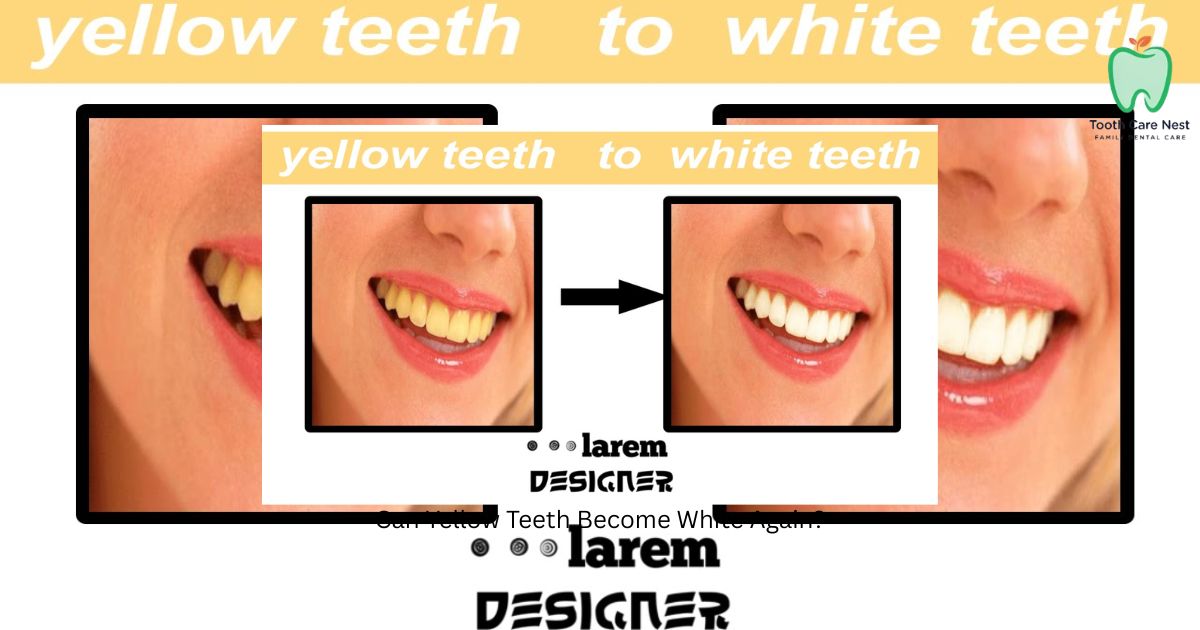
Yellow teeth can often become noticeably whiter, but the results depend on what is causing the discoloration. Surface stains from coffee, tea, tobacco, and certain foods may respond well to professional cleaning or whitening treatments, while deeper or age-related discoloration may require more advanced options. Understanding the cause is the first step toward choosing an effective approach.
If you are wondering, “Can yellow teeth become white again?”, the answer is often yes, although natural tooth color varies from person to person. Good oral hygiene, whitening toothpaste, professional whitening, and dentist-recommended treatments can help brighten your smile safely. However, not every whitening method works equally well, and some popular home remedies may damage enamel.
You can also read; Why Do My Bottom Teeth Hurt All of a Sudden? Understanding Lower Teeth Pain
Why Do Teeth Turn Yellow?
Teeth can turn yellow for several reasons, and discoloration may develop on the surface of the teeth or from changes deeper within the tooth. Common factors include aging, food and drinks, tobacco use, poor oral hygiene, enamel wear, certain medications, and natural differences in tooth color. Understanding whether the staining is surface-level or deeper can help determine which whitening method is most likely to work.
Surface (Extrinsic) Stains
Surface stains develop on the outside of the teeth when pigments from foods, drinks, or tobacco build up on the enamel. These stains are often easier to remove with professional cleaning and appropriate whitening products.
- Coffee and tea: Dark pigments can gradually stain the enamel.
- Red wine: Colored compounds can contribute to noticeable surface discoloration.
- Tobacco use: Smoking and other tobacco products can leave yellow or brown stains.
- Dark-colored foods: Foods such as berries, tomato-based sauces, and certain spices may stain teeth.
- Poor oral hygiene: Plaque and tartar buildup can trap stains and make teeth appear more yellow.
Deep (Intrinsic) Stains
Deep stains occur within the tooth rather than only on its outer surface. They can be more difficult to remove with ordinary whitening toothpaste because the discoloration is beneath the enamel.
- Aging: Enamel naturally becomes thinner over time, making the naturally yellowish dentin more visible.
- Certain medications: Some medications taken during tooth development can cause lasting discoloration.
- Excessive fluoride exposure: High fluoride exposure while teeth are developing can contribute to discoloration or mottling.
- Tooth trauma: An injury can cause a tooth to darken from changes inside the tooth.
- Natural tooth color: Some people naturally have darker or more yellowish dentin that becomes visible through translucent enamel.
Can All Yellow Teeth Be Whitened?
Not all yellow teeth respond to whitening in the same way. Surface stains caused by foods, drinks, and tobacco often respond well, while deeper discoloration caused by aging, trauma, medications, or changes inside the tooth may be more difficult to lighten. A dentist can help determine the type of staining and recommend the most suitable option.
What Responds Well to Whitening
Teeth with surface stains from coffee, tea, tobacco, red wine, and certain foods often respond well to professional or dentist-recommended whitening treatments. Good oral hygiene and professional cleaning can also make a noticeable difference when plaque, tartar, and external stains are making the teeth look yellow.
What Improves but Not Dramatically
Some teeth become lighter with whitening but may not reach a bright white shade. This can happen when discoloration is partly related to natural dentin color, aging, enamel thinning, or mild intrinsic staining. Results vary from person to person, so realistic expectations are important.
When Whitening Doesn’t Work
- Deep intrinsic stains: Discoloration inside the tooth may not respond fully to conventional whitening.
- Dental restorations: Crowns, veneers, fillings, and bonding do not whiten like natural teeth.
- Severely damaged or discolored teeth: Trauma or internal tooth changes may require restorative treatment instead of ordinary whitening.
How Much Does Teeth Whitening Cost?
The cost of teeth whitening varies depending on the type of treatment, the dental clinic, your location, and the level of discoloration. Professional in-office whitening usually costs more than dentist-provided take-home kits or over-the-counter products, while simple whitening toothpaste is generally the least expensive option. Before choosing a treatment, consider both the expected results and whether the method is appropriate for the type of staining you have.
Whitening Toothpaste
Whitening toothpaste can help remove surface stains caused by coffee, tea, tobacco, and certain foods, making teeth appear brighter over time. It generally works by using gentle polishing ingredients rather than changing the natural color of the teeth. Choose a fluoride toothpaste from a reputable brand and avoid brushing too aggressively, especially if you already have sensitive teeth.
Whitening Strips
Whitening strips contain bleaching ingredients that can lighten certain types of tooth discoloration when used as directed. They are generally more effective for surface and some mild deeper stains than ordinary whitening toothpaste. Follow the product instructions carefully and stop or reduce use if you develop significant tooth sensitivity or gum irritation.
LED Whitening Kits
LED whitening kits combine a whitening gel with an LED light that is intended to support the whitening process. Results vary depending on the ingredients in the gel and the type of staining, so the light itself should not be expected to dramatically whiten teeth. Use only products from reputable manufacturers and follow the instructions to reduce the risk of sensitivity or gum irritation.
Dentist-Supervised Take-Home Trays
Dentist-supervised take-home trays can provide a more controlled way to whiten yellow teeth at home. A dentist can provide custom-fitted trays and an appropriate whitening gel based on your teeth and sensitivity level. Because the treatment is supervised by a dental professional, it can be a suitable option for people who want more noticeable results while reducing the risk of improper use.
Home Remedies for Whitening Teeth: What Actually Helps?
Some home methods can help make yellow teeth look brighter, especially when discoloration comes from surface stains. Brushing regularly with fluoride whitening toothpaste, maintaining good oral hygiene, limiting coffee, tea, tobacco, and other staining foods and drinks, and rinsing with water after consuming acidic or colored foods can help prevent new stains. However, remedies such as lemon juice, vinegar, or abrasive substances like charcoal and baking soda mixtures may damage enamel when used improperly, so dentist-recommended whitening products are generally a safer choice for noticeable results.
Natural Ways to Whiten Teeth Safely
Natural approaches can help keep teeth looking cleaner and reduce new surface stains, although they usually cannot whiten teeth as dramatically as professional treatments. Brushing twice daily with fluoride toothpaste, cleaning between your teeth, drinking water after staining foods and drinks, and limiting coffee, tea, tobacco, and highly pigmented foods are safer ways to maintain a brighter smile. Avoid harsh acidic or abrasive remedies that can wear away enamel.
Are Natural Remedies Safe?
Natural does not always mean safe, especially when a remedy is acidic or abrasive.
- Safer approach: Focus on good oral hygiene and reducing foods and drinks that cause staining rather than using harsh DIY whitening ingredients.
In-Clinic Teeth Whitening
In-clinic teeth whitening is a professional treatment that uses a concentrated bleaching gel to lighten certain types of tooth discoloration. Because the procedure is performed by a dental professional, the gums and teeth can be monitored throughout treatment. It can provide more noticeable results than many over-the-counter whitening products, although the amount of whitening varies depending on the type and depth of staining.
Custom Take-Home Whitening Trays
Custom take-home whitening trays are made to fit your teeth and are used with a dentist-recommended whitening gel. They allow you to whiten your teeth gradually at home while following professional instructions. Because the trays fit closely over the teeth, they can provide more even application than generic trays and may be a good option for people who prefer a slower whitening process.
Dental Bonding
Dental bonding can improve the appearance of teeth that do not respond well to traditional whitening, particularly when discoloration is caused by certain intrinsic stains, small defects, or damage. A tooth-colored resin is applied and shaped over the affected tooth to create a more uniform appearance. Bonding does not actually bleach the natural tooth but can cover discoloration and improve its color.
Porcelain Veneers
Porcelain veneers are thin, custom-made coverings placed over the front surfaces of teeth to change their color and appearance. They can be an option when severe or deep discoloration does not respond adequately to whitening treatments. Veneers can provide a consistently brighter smile, but they are a more permanent and involved treatment than conventional teeth whitening and should be discussed carefully with a dentist.
Do Teeth Whitening Powders Like Purely White Deluxe Work?
Teeth whitening powders may help remove some surface stains and make teeth appear cleaner or temporarily brighter, depending on their ingredients. However, their effectiveness varies, and abrasive powders used too aggressively may wear down enamel or irritate the gums. Check the ingredients and follow the product directions rather than assuming a whitening powder will remove deep yellow discoloration.
Does Baking Soda Actually Whiten Teeth?
Baking soda can help remove some surface stains because of its mild abrasive properties, which may make teeth look brighter. However, it does not bleach the natural color of teeth or reliably remove deep stains. Using too much or brushing aggressively with baking soda can contribute to enamel wear, so a fluoride toothpaste designed for regular use is generally a better everyday choice.
Do Whitening Strips Really Work on Yellow Teeth?
Whitening strips can work on some yellow teeth because many contain peroxide-based bleaching ingredients that can lighten certain surface and deeper discoloration. Results depend on the cause and severity of the staining, and they usually work better on natural teeth than on crowns, veneers, or fillings. Following the instructions carefully can help reduce the risk of sensitivity and gum irritation.
Does Oil Pulling Whiten Teeth?
Oil pulling may help reduce some debris or surface buildup in the mouth, but there is limited evidence that it significantly whitens teeth. It should not be considered a replacement for brushing with fluoride toothpaste, flossing, professional cleaning, or proven whitening treatments. If your main goal is to lighten yellow teeth, dentist-recommended whitening methods are more predictable.
Is Hydrogen Peroxide Safe for Teeth Whitening?
Hydrogen peroxide is a common ingredient in professionally used and over-the-counter teeth-whitening products, but the concentration and method of use matter. Applying concentrated hydrogen peroxide directly to your teeth or gums can cause irritation, sensitivity, or tissue damage. It is safer to use a properly formulated whitening product according to its instructions or under a dentist’s guidance.
Does Whitening Toothpaste Work on Yellow Teeth?
Whitening toothpaste can help remove surface stains from coffee, tea, tobacco, and certain foods, making yellow teeth look cleaner and brighter. Most whitening toothpastes do not dramatically change the natural color of teeth because they mainly target external stains. For deeper discoloration, a dentist-supervised whitening treatment may provide more noticeable results.
Can Brushing Alone Make Yellow Teeth White Again?
Regular brushing can improve the appearance of yellow teeth when the discoloration is caused by plaque or surface stains, but brushing alone usually cannot make naturally yellow or deeply stained teeth completely white. Using fluoride toothpaste twice daily and cleaning between your teeth helps maintain a healthy, brighter smile. Deeper stains may require professional whitening or another dental treatment.
How to Whiten Aging Yellow Teeth
Aging can make teeth look more yellow as enamel gradually becomes thinner and the naturally darker dentin underneath becomes more visible. Professional whitening or dentist-supervised take-home treatments may lighten natural teeth, although results vary. If discoloration is severe or does not respond well to bleaching, options such as bonding or veneers may be considered after a dental evaluation.
How Long Does It Take for Yellow Teeth to Turn White?
The time it takes to whiten yellow teeth depends on the treatment used, the type of discoloration, and how severe the staining is. Professional in-office whitening can produce noticeable results in a single appointment, while take-home trays and whitening strips generally require repeated use over several days or weeks. Surface stains may respond faster than deeper, intrinsic discoloration.
Professional treatments typically provide faster and more noticeable results than everyday whitening products. However, whitening does not permanently prevent teeth from becoming stained again. Your diet, oral hygiene, tobacco use, and natural aging can all affect how long the results last.
The table below provides general estimates for common whitening methods. Actual results can vary from person to person, and a dentist can recommend the most appropriate option based on the cause of your yellow teeth.
| Method | Estimated Time to Results | Longevity of Results |
| Professional In-Office | 1 Hour | 1–3 Years |
| Custom Trays (Dentist) | 1–2 Weeks | 1–2 Years |
| Whitening Strips | 2–3 Weeks | About 6 Months |
| Whitening Toothpaste | 4–6 Weeks (Surface only) | Temporary |
When Whitening Won’t Work
Teeth whitening does not work equally well for every type of discoloration. Whitening products are designed primarily for natural tooth structure, so stains caused by certain medications, trauma, aging, or changes inside the tooth may be more difficult to remove. In these situations, repeated whitening may produce only limited improvement.
Whitening also cannot change the color of dental restorations such as crowns, veneers, fillings, and bonding. If these restorations are noticeably darker or yellower than your natural teeth, bleaching the surrounding teeth may make the difference in color more obvious. Your dentist can discuss whether replacing or adjusting the restoration is appropriate.
Severe enamel wear can also limit whitening results. When enamel becomes thinner, the naturally yellowish dentin underneath may become more visible, and bleaching cannot simply remove this natural color. Teeth with significant damage, cracks, or internal discoloration may need treatment for the underlying problem before cosmetic whitening is considered.
If your teeth do not become noticeably whiter after using a reputable whitening product correctly, avoid repeatedly increasing the amount or frequency of treatment. A dentist can determine why the whitening is not working and may recommend alternatives such as professional whitening, dental bonding, or porcelain veneers when appropriate.
What Is the Best Way to Whiten Teeth at Home?
The best way to whiten teeth at home is to use a dentist-recommended whitening method, such as custom take-home trays or a reputable peroxide-based whitening product used exactly as directed. Whitening toothpaste can help remove surface stains, while strips may provide more noticeable lightening over several weeks. Avoid harsh DIY methods such as lemon juice or concentrated peroxide, which can damage enamel and irritate your gums.
How to Whiten Extremely Yellow Teeth
Extremely yellow teeth may need more than regular whitening toothpaste, especially when the discoloration is deep or related to aging, medication, or enamel changes. A dental professional can determine the cause and recommend options such as professional in-office whitening or custom take-home trays. If severe discoloration does not respond to bleaching, cosmetic treatments such as bonding or veneers may provide a more consistent result.
How to Keep Teeth White After Whitening
Keeping your teeth white after a whitening treatment starts with good daily oral hygiene. Brush twice a day with fluoride toothpaste and clean between your teeth regularly to remove plaque and food particles that can contribute to discoloration. A soft-bristled toothbrush can help protect the enamel while keeping your smile clean.
Try to limit foods and drinks that commonly cause stains, such as coffee, tea, red wine, cola, and dark sauces. You do not necessarily have to avoid them completely, but drinking water afterward can help wash away pigments and acids. Using a straw for some beverages may also reduce contact with the front teeth.
Avoid tobacco products because they can quickly cause yellow or brown staining and make it harder to maintain whitening results. Regular dental cleanings can also remove plaque and surface stains that brushing cannot completely eliminate. Maintaining these habits can help your teeth stay brighter for longer.
Whitening results naturally fade over time as teeth are exposed to foods, drinks, aging, and everyday use. If your dentist recommends occasional touch-up treatments, follow the recommended schedule rather than repeatedly whitening your teeth on your own. If you develop significant sensitivity or gum irritation, stop the whitening treatment and speak with a dental professional.
Myths About Yellow Teeth
Many common beliefs about yellow teeth and whitening are misleading. Knowing what is true can help you choose safer and more effective ways to improve your smile.
Myth: Yellow teeth always mean poor hygiene
Yellow teeth do not always indicate poor oral hygiene. Natural tooth color varies, and teeth can become more yellow because of aging, enamel thinning, genetics, certain medications, or staining from foods and drinks. Good oral hygiene is important, but healthy teeth are not necessarily bright white.
Myth: Whitening damages enamel
Properly formulated whitening products used according to their directions generally do not permanently damage healthy enamel. However, overusing whitening products or using highly concentrated or inappropriate substances can cause sensitivity and irritation. Following professional or product instructions is important for safer whitening.
Myth: Natural teeth should be bright white
Healthy natural teeth do not have to be perfectly white. Enamel is naturally somewhat translucent, allowing the yellowish dentin underneath to influence tooth color. A slightly off-white or yellowish shade can be completely normal and does not automatically indicate a dental problem.
Myth: Once you whiten, teeth stay white forever
Teeth whitening is not permanent. Over time, teeth can become darker again because of aging, staining foods and drinks, tobacco use, and normal wear. Good oral hygiene and occasional dentist-recommended maintenance can help extend the results.
Myth: All whitening methods work equally well
Different whitening methods produce different results depending on their ingredients and the type of staining. Whitening toothpaste mainly removes surface stains, while peroxide-based treatments can lighten certain types of deeper discoloration. Professional treatments may provide faster or more noticeable results than many over-the-counter options.
Transform Your Smile in Goodyear, AZ Today
If you are in Goodyear, AZ, and want a brighter smile, a dental professional can examine your teeth, identify the cause of discoloration, and recommend a whitening option suited to your needs. Professional guidance can help you achieve more predictable results while reducing the risk of unnecessary sensitivity or enamel and gum irritation.
Conclusion
Yellow teeth can often be made noticeably brighter when the cause is surface staining, but results depend on the type and severity of discoloration. Good oral hygiene, whitening toothpaste, strips, dentist-supervised treatments, and professional whitening can help, while deeper stains may require cosmetic options such as bonding or veneers. The safest approach is to choose a whitening method suited to your teeth and follow professional guidance to protect your enamel and gums.
Frequently Asked Questions
Can yellow teeth become white again permanently?
Yellow teeth can often be whitened, but the results are not permanent. Teeth naturally pick up new stains from foods, drinks, tobacco, and aging over time. Good oral hygiene and occasional dentist-recommended touch-ups can help maintain a brighter smile.
What is the fastest way to whiten yellow teeth?
Professional in-office teeth whitening is generally one of the fastest ways to achieve noticeable whitening. Treatment time varies depending on the product and the level of discoloration, but some people see a visible difference after a single appointment. A dentist can determine whether professional whitening is suitable for your teeth.
Can yellow teeth become white naturally?
Natural habits can help remove or prevent surface stains, but they usually cannot dramatically change the natural color of yellow teeth. Regular brushing with fluoride toothpaste, cleaning between the teeth, drinking water, and limiting staining foods and drinks can help teeth look cleaner and brighter.
Are whitening strips better than whitening toothpaste?
Whitening strips generally provide more noticeable whitening because many contain peroxide-based ingredients that can lighten certain types of discoloration. Whitening toothpaste mainly helps remove surface stains through gentle polishing. The better option depends on your type of staining, sensitivity, and whitening goals.
What foods make teeth yellow the fastest?
Coffee, tea, red wine, cola, berries, dark sauces, and other strongly pigmented foods and drinks can contribute to tooth staining. Frequent exposure can make discoloration more noticeable, especially when oral hygiene is poor. Rinsing with water after consuming staining foods and drinks can help reduce their effect.
Are professional teeth whitening treatments safe?
Professional teeth whitening is generally considered safe when performed or recommended by a qualified dental professional. Temporary tooth sensitivity or gum irritation can occur, particularly with stronger whitening products. A dentist can check for cavities, gum problems, cracks, or other issues before treatment.
How long do whitening results last?
Whitening results can last from several months to a few years, depending on the treatment and your lifestyle. Regular consumption of coffee, tea, tobacco, and other staining products can shorten the duration. Maintaining good oral hygiene and following your dentist’s maintenance advice can help extend the results.
Can smoking or coffee undo whitening results?
Yes, smoking and frequent coffee consumption can gradually stain whitened teeth again. Tobacco contains substances that can cause signific

Stoke is the author of ToothCareNest, sharing simple, practical, and easy-to-understand information about dental care, oral hygiene, and maintaining a healthy smile.