
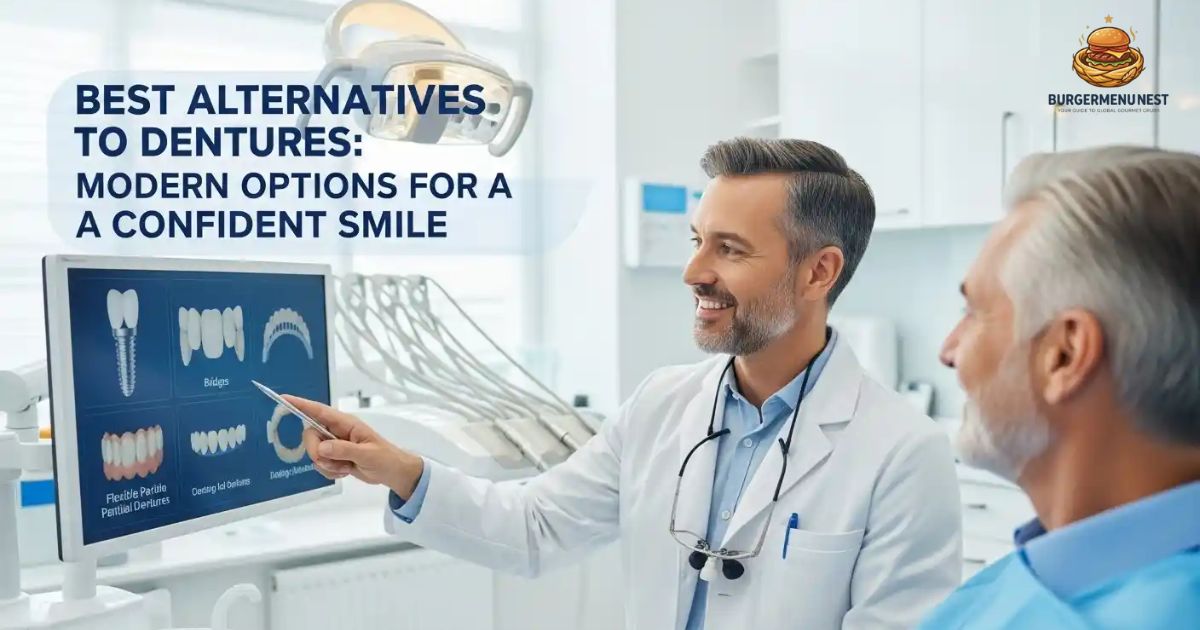
Best Alternatives to Dentures: For people who have missing teeth, dentures are not the only option available. Depending on your oral health, budget, number of missing teeth, and personal preferences, alternatives may include dental implants, implant-supported bridges, fixed dental bridges, and implant-supported dentures. Each option offers different benefits in terms of stability, appearance, comfort, maintenance, and cost.
Choosing the right replacement depends on factors such as the condition of your jawbone, remaining teeth, gum health, and overall dental needs. A dentist can examine your mouth and explain which options are suitable for you. Understanding how each alternative works can help you have a more informed discussion about replacing missing teeth.
You can also read:Is Deep Cleaning Painful?
Is There an Alternative to Dentures?
Yes, there are several alternatives to traditional removable dentures for replacing missing teeth. Dental implants, fixed dental bridges, implant-supported dentures, and implant-supported bridges can provide more stability and may feel more like natural teeth. The most suitable choice depends on how many teeth are missing, the health of your gums and jawbone, and your overall dental condition.
Dental implants are often used as a long-term tooth replacement because they are anchored into the jawbone, while bridges can replace one or more missing teeth by using neighboring teeth or implants for support. Implant-supported dentures combine the coverage of dentures with the added stability of implants. A dentist can evaluate your mouth and explain which options are appropriate for your specific needs.
Alternative to Partial Dentures: Best Options 1para
If you are missing one or several teeth, you have alternatives to traditional partial dentures. The right option depends on the number and location of missing teeth, the condition of your remaining teeth and gums, your jawbone health, and your budget. Common choices include dental implants, implant-supported bridges, fixed bridges, and flexible partial dentures.
Best Partial Denture Replacement Options
Dental Implants for Individual Teeth
Dental implants can replace individual missing teeth without requiring a removable appliance. An implant is placed into the jawbone and supports a dental crown, providing a stable replacement that can look and function much like a natural tooth. They may be suitable when the surrounding teeth and jawbone are healthy enough to support an implant.
Implant-Supported Bridges
Implant-supported bridges can replace several missing teeth in a row by using dental implants as anchors. Unlike a traditional bridge, the replacement teeth do not need to rely on neighboring natural teeth for support. This can provide a stable and fixed option for people who are missing multiple adjacent teeth.
Fixed Bridges
A fixed dental bridge replaces one or more missing teeth by attaching artificial teeth to supporting teeth on either side of the gap. It remains in place rather than being removed for cleaning and can restore chewing ability and appearance. Your dentist will assess the health and strength of the supporting teeth before recommending this option.
Top-Rated Flexible Partial Dentures
Valplast Flexible Partials
Valplast flexible partial dentures are made from a flexible thermoplastic material that can adapt around the natural teeth and gums. They are removable and typically use gum-colored material rather than visible metal clasps, which can provide a more discreet appearance.
TCS Thermoplastic Partials
TCS thermoplastic partials are removable tooth replacements made from flexible, durable thermoplastic material. They can be designed to replace several missing teeth while providing a lightweight alternative to some traditional acrylic or metal partial dentures. Their suitability depends on the patient’s dental condition and the location of the missing teeth.
TCS Thermoplastic Partials
TCS thermoplastic partials can offer a flexible and relatively comfortable way to replace missing teeth when a removable option is preferred. They are designed to fit around the existing teeth and gums while restoring basic chewing function and appearance. A dental professional can determine whether this type of partial is appropriate for your specific needs.
How Much Do Partial Dentures Cost Without Insurance?
The cost of partial dentures without insurance can vary considerably based on the material, design, number of teeth being replaced, and dental laboratory fees. Your dentist may also recommend additional treatments, such as extractions or gum treatment, which can increase the overall cost.
Partial Dentures for Back Teeth Cost
Partial dentures for back teeth can vary in price depending on how many molars or premolars need to be replaced and the type of partial denture selected. Metal-framework, acrylic, and flexible partials have different price ranges, so a dental examination and personalized estimate are usually needed.
The location of the missing teeth can also affect the design and complexity of the denture. Your dentist will consider your remaining teeth, bite, gum health, and the amount of support available before determining the most suitable option.
Different Types of Partial Dentures
Acrylic partial dentures are generally more affordable and can be useful as a temporary or removable replacement. Metal-framework partial dentures are typically thinner and more rigid, while flexible partial dentures use thermoplastic materials and may provide a more discreet appearance.
The final price depends on the specific design and laboratory used. Asking for a written estimate that includes examinations, impressions, adjustments, and follow-up visits can help you understand the total cost.
Does Delta Dental Cover Partial Dentures?
Delta Dental plans may provide coverage for partial dentures, but the amount covered depends on your specific plan, benefits, exclusions, deductible, and annual maximum. Some plans may classify partial dentures as a covered prosthodontic service while others may have waiting periods or replacement limitations. Check your plan documents or contact Delta Dental before treatment to confirm your coverage and estimated out-of-pocket cost.
Alternatives to Dental Implants
If dental implants are not suitable because of cost, bone availability, medical considerations, or personal preference, several other tooth-replacement options may be available. Your dentist can compare these choices based on stability, appearance, maintenance, longevity, and cost.
- Snap-On Dentures (Overdentures): These removable dentures attach to dental implants or other supporting structures to provide greater stability than conventional dentures.
- Resin-Bonded Bridges (Maryland Bridges): These bridges use a framework bonded to the back of neighboring teeth and can replace certain missing front teeth without requiring extensive preparation.
- Modern Denture Technology: Advances in digital impressions, computer-aided design, and newer denture materials can improve the fit, appearance, and comfort of removable dentures.
Partial Dentures for Back Teeth: Special Considerations
Replacing missing back teeth requires careful consideration because molars and premolars play an important role in chewing and maintaining a balanced bite. A partial denture must have adequate support and stability so it does not move excessively while eating. Your dentist will evaluate the remaining teeth, gum condition, bite, and position of the missing teeth when planning the appliance.
Back-tooth replacement can also affect how pressure is distributed across the remaining teeth and gums. Depending on your situation, a conventional partial denture, fixed bridge, implant-supported restoration, or another option may be considered. Regular dental checkups are important to monitor the fit of the partial denture and the health of the teeth supporting it.
Alternative Options for Dentures: Comparing Your Choices
Dental Implants
- Replace individual missing teeth
- Anchored securely into the jawbone
- Look and function like natural teeth
- Do not require removing a denture for daily use
- Can provide a long-term tooth replacement option
Implant-Supported Bridges
- Replace several missing teeth in a row
- Supported by dental implants rather than natural teeth
- Provide greater stability than removable dentures
- Can restore chewing function and appearance
- May reduce pressure on neighboring natural teeth
Traditional Fixed Bridges
- Replace one or more adjacent missing teeth
- Supported by neighboring natural teeth
- Remain fixed in the mouth
- Can restore chewing and speaking ability
- Usually require preparation of supporting teeth
Flexible Partial Dentures
- Made from flexible thermoplastic materials
- Removable for cleaning and maintenance
- May have a more discreet appearance than metal partials
- Can replace several missing teeth
- Often provide a lightweight alternative to some rigid partial dentures
Snap-On Dentures
- Attach to dental implants or supporting structures
- Offer more stability than conventional removable dentures
- Can be removed for cleaning
- May improve chewing confidence
- Require suitable support from implants or remaining oral structures
Traditional Partial Dentures
- Replace several missing teeth with a removable appliance
- Can be supported by remaining natural teeth
- Generally require less invasive treatment than implants
- Available with different materials and framework designs
- Can restore basic chewing function and appearance
You Should Brush and Floss the Abutment Teeth: TRUE
If you wear a partial denture, it is important to brush and floss the natural teeth that support it, often called abutment teeth. Food particles and plaque can collect around these teeth and the denture clasps, increasing the risk of cavities and gum disease. Brush twice daily with fluoride toothpaste and clean between the teeth daily using floss or another method recommended by your dentist.
Your partial denture should also be cleaned regularly according to your dentist’s instructions. Keeping both the appliance and supporting teeth clean helps maintain oral health and can improve the longevity and fit of the restoration.
Denture Alternatives for Travel
For frequent travelers, fixed tooth replacements such as dental implants, implant-supported bridges, and traditional fixed bridges can be convenient because they do not need to be removed during meals or packed separately. However, they still require normal brushing, flossing, and dental care while traveling.
Removable options such as flexible partial dentures and overdentures can also be practical when properly maintained. If you travel with a removable appliance, carry its case, cleaning supplies, and any recommended products, and avoid placing the denture in a napkin where it could accidentally be thrown away.
Best Denture Brands vs Implant Brands
Denture and implant products come from many different manufacturers, but the brand alone does not determine whether a restoration is right for you. Dentures are typically custom-made by a dental laboratory based on your impressions, measurements, bite, and individual needs. Materials and design can have a greater impact on fit, comfort, and appearance.
Dental implants also come in different systems and materials, and dentists select them based on factors such as bone condition, restoration design, and clinical requirements. Instead of choosing solely by brand name, ask your dentist which system they recommend and why, including information about maintenance, warranty, compatibility, and long-term follow-up.
Partials That Match Natural Teeth
Modern partial dentures can be customized to closely match the color, shape, and size of your natural teeth. Dentists and dental laboratories can select artificial teeth that blend with your existing teeth and use gum-colored materials to create a more natural-looking result. The position of the missing teeth, available space, and surrounding teeth all influence the final appearance.
Flexible partials, acrylic partials, and metal-framework partials can all be designed with attention to aesthetics. For the most natural appearance, your dentist may consider factors such as tooth shade, translucency, facial proportions, and the visibility of clasps when planning your partial denture.
Making Your Decision: Which Alternative Works for You?
Choosing a denture alternative depends on your dental needs, lifestyle, preferences, and treatment goals. Consider these factors when discussing your options with your dentist:
- Budget: Compare the initial cost as well as potential maintenance and replacement expenses.
- Permanence: Consider whether you prefer a removable option or a fixed, longer-term restoration.
- Health Factors: Gum health, jawbone condition, remaining teeth, and overall health can affect which treatments are suitable.
- Timeline: Some options can be completed relatively quickly, while implant treatment may require several stages and healing time.
- Comfort: Consider how stable, natural, and comfortable each option feels during eating, speaking, and everyday activities.
Taking the Next Step
The right alternative to dentures depends on the number of missing teeth, your gum and jawbone health, your budget, and whether you prefer a removable or fixed solution. Dental implants, bridges, implant-supported restorations, and flexible partial dentures each have different advantages and limitations.
Start by scheduling a dental evaluation to discuss your options. Your dentist can examine your teeth and gums, assess your bite and jawbone, and explain which treatments are suitable for your situation. A personalized treatment plan can help you understand the expected procedure, timeline, maintenance, and costs.
Ready to Find Your Perfect Denture Alternative?
If traditional dentures do not feel like the right choice, there are several alternatives worth discussing with a dental professional. Fixed bridges may replace missing teeth using neighboring teeth for support, while implants can provide a stable foundation for crowns, bridges, or dentures. Flexible partials may be another option if you prefer a removable restoration.
Before making a decision, consider your comfort, appearance, budget, treatment time, and long-term oral health. A thorough consultation can help you compare these factors and choose a tooth-replacement approach that fits your individual needs and circumstances.
Frequently Asked Questions
What’s the cheapest alternative to dentures?
The least expensive option varies depending on how many teeth are missing and the treatment needed. In many cases, a traditional partial denture or basic removable appliance costs less upfront than dental implants or fixed bridges. A dentist can provide an estimate based on your specific situation.
Are flexible partial dentures better than traditional partials?
Flexible and traditional partial dentures have different advantages. Flexible partials may offer a more discreet appearance and can feel lightweight, while traditional acrylic or metal-framework partials may provide greater rigidity and support. The better choice depends on your dental condition, preferences, and the design required.
Can I get dental implants if I have gum disease?
Dental implants may still be possible for someone who has had gum disease, but active gum disease generally needs to be treated and controlled first. The dentist may also evaluate your jawbone and overall oral health before determining whether implants are appropriate.
How long do partial dentures last?
Partial dentures can last for several years, but their lifespan varies based on the material, fit, daily use, oral hygiene, and changes in your mouth. Regular dental checkups can help identify when adjustments, repairs, or replacement may be needed.
Is there a DIY option for partial dentures?
DIY partial dentures are not recommended as a replacement for professionally designed dental restorations. Improperly fitting appliances can irritate the gums, affect your bite, damage natural teeth, or create other oral health problems. A dentist should evaluate your mouth and provide a properly fitted tooth-replacement option.

Stoke is the author of ToothCareNest, sharing simple, practical, and easy-to-understand information about dental care, oral hygiene, and maintaining a healthy smile.