
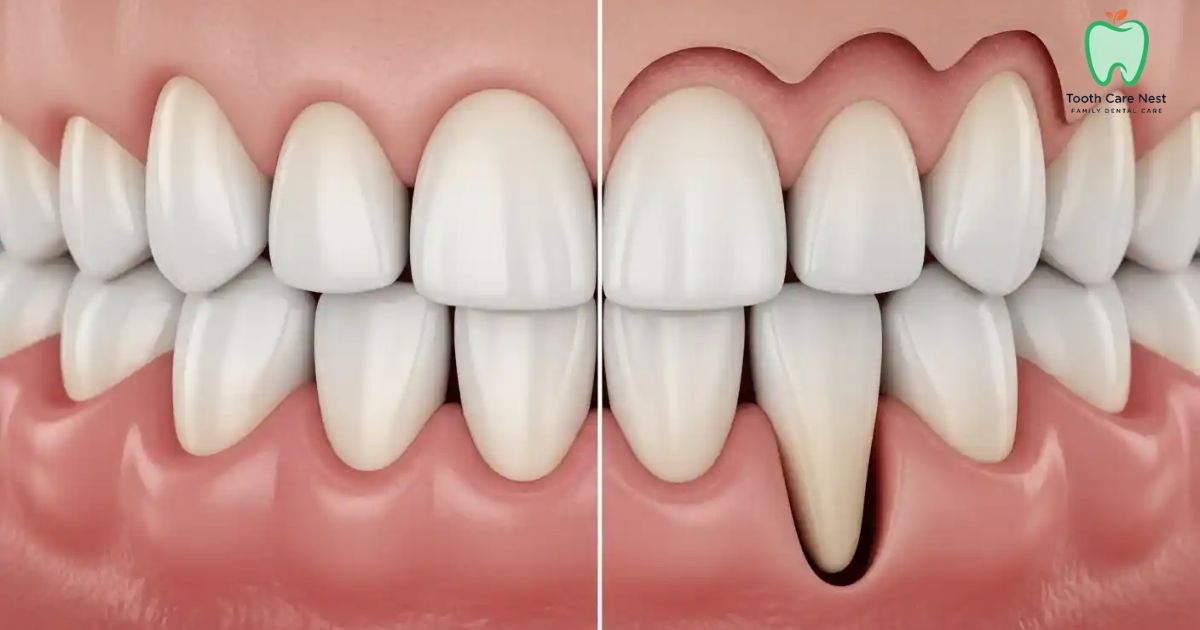
Can Receding Gums Grow Back: In most cases, receding gums do not naturally grow back on their own once gum tissue has been lost. Gum recession occurs when the gumline moves away from the tooth, exposing more of the tooth or its root. However, treating the underlying cause—such as gum disease, aggressive brushing, or poor oral hygiene—can help prevent further recession and protect the remaining gum tissue.
Although lost gum tissue usually cannot regenerate naturally, dental treatments can improve the gumline in some cases. Depending on the severity and cause, a dentist or periodontist may recommend improved oral hygiene, treatment for gum disease, or a gum grafting procedure to cover exposed roots and restore some of the lost tissue.
You can also read; Best Alternatives to Dentures: Explore Top Tooth Options
What Is Gum Recession?
Gum recession occurs when the gum tissue surrounding a tooth pulls back or wears away, exposing more of the tooth and sometimes its root. It can affect one tooth or several teeth and may develop gradually. Common causes include gum disease, aggressive brushing, tobacco use, and factors such as naturally thin gum tissue.
What Happens When Gums Recede?
When gums recede, the tooth root becomes more exposed because it is no longer fully protected by gum tissue. This can lead to increased sensitivity, especially to hot or cold foods and drinks, and may make teeth appear longer. Significant recession can also increase the risk of root decay and other complications if the exposed area is not properly cared for.
How Common Is Gum Recession?
Gum recession is relatively common, particularly among adults, and its likelihood can increase with age. It may develop slowly without noticeable symptoms, so some people do not realize their gums are receding until a dentist identifies the changes during an examination. Regular dental checkups can help detect recession early and address its underlying cause.
How Can I Tell If I Have Receding Gums?
You may have receding gums if your teeth appear longer than they used to, your gumline looks lower, or you notice more of the tooth root near the gumline. Increased tooth sensitivity or spaces developing between the teeth and gums can also be signs. A dentist can confirm gum recession during a routine examination and determine its severity.
Warning Signs of Gum Recession
Early warning signs can include gums that look thinner or lower around certain teeth, visible tooth roots, increased sensitivity, or a noticeable change in the appearance of your smile. Bleeding, redness, swelling, or persistent bad breath may also indicate gum disease, which can contribute to gum recession and should be evaluated by a dentist.
Symptoms of Gum Recession
Gum recession may cause tooth sensitivity to hot, cold, sweet, or acidic foods and drinks. Some people may experience tenderness around the gumline, discomfort while brushing, or increased sensitivity when eating. In more advanced cases, exposed roots can be more vulnerable to decay and wear.
How Is Gum Recession Diagnosed?
A dentist or periodontist can diagnose gum recession by examining your gums and measuring the distance between the gumline and the tooth using a periodontal probe. They may also check for gum inflammation, periodontal pockets, tooth mobility, and signs of bone loss. Dental X-rays may be used when additional information about the supporting bone is needed.
What Causes Receding Gums?
Poor Oral Hygiene
Poor oral hygiene allows plaque and bacteria to accumulate around the teeth and gumline. Over time, this buildup can irritate and inflame the gums, increasing the risk of gum disease and gum recession. Regular brushing, flossing, and professional dental cleanings can help protect the gums.
Gum Disease (Periodontal Disease)
Periodontal disease is one of the major causes of gum recession. As the infection and inflammation damage the gums and supporting tissues around the teeth, the gumline can gradually move downward and expose more of the tooth root. Treating gum disease early can help limit further damage.
Aggressive Brushing
Brushing your teeth too forcefully or using a hard-bristled toothbrush can irritate and gradually wear down the gum tissue. Using a soft-bristled toothbrush and gentle circular motions can help clean the teeth without putting excessive pressure on the gums.
Genetics and Age
Some people naturally have thinner gum tissue or may be more susceptible to gum recession because of genetic factors. The risk can also increase with age as the gums and supporting tissues undergo changes over time. Good oral hygiene and regular dental examinations can help identify recession early.
Smoking and Tobacco Use
Smoking and other forms of tobacco use can increase the risk of gum disease and interfere with healthy gum tissue. Tobacco can also make it harder for the gums to heal after injury or dental treatment. Avoiding tobacco can help protect gum health and reduce periodontal risks.
Teeth Grinding and Misalignment
Grinding or clenching the teeth can place excessive forces on the teeth and their supporting tissues, which may contribute to gum problems in some people. Misaligned or crowded teeth can also create areas that are difficult to clean and may place uneven pressure on the gums. A dentist can evaluate your bite and recommend appropriate treatment when necessary.
Can Receding Gums Grow Back?
Receding gums generally do not grow back naturally once gum tissue has been lost. However, identifying and treating the cause of recession can help prevent it from getting worse. Depending on the severity, treatments such as improved oral hygiene, periodontal care, or gum grafting may help protect exposed tooth roots and restore gum coverage.
The Truth About Receding Gums
Gum tissue does not usually regenerate on its own after significant recession. Early recession may be managed by addressing contributing factors such as gum disease, aggressive brushing, or tobacco use. A dentist or periodontist can assess the affected area and recommend treatment to protect the remaining gum tissue.
Is Gum Recession Curable?
Gum recession can often be managed, but naturally lost gum tissue generally cannot be restored through routine home care. Treatment depends on the underlying cause and severity. Professional periodontal treatment can control gum disease, while procedures such as gum grafting may be used to cover exposed roots and improve the gumline in appropriate cases.
What Natural Remedies Can and Can’t Do
Natural approaches such as gentle brushing, proper flossing, and maintaining good oral hygiene can help keep the gums healthy and may prevent further recession caused by irritation or plaque buildup. However, they cannot make significantly lost gum tissue grow back. Avoid harsh scrubbing or unproven remedies that may irritate the gums, and consult a dentist if you notice ongoing recession or tooth sensitivity.
Treatment Options for Receding Gums
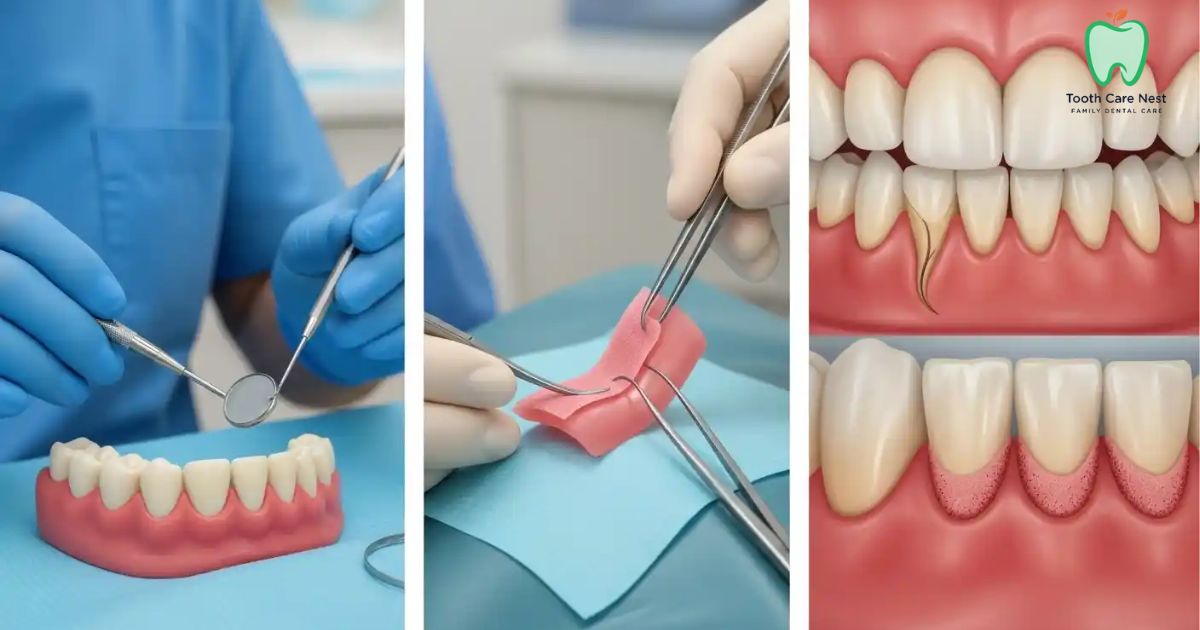
Treatment for receding gums depends on the cause, severity, and condition of the surrounding teeth and tissues. The main goal is to control factors contributing to recession, protect exposed tooth roots, and prevent further gum damage. A dentist or periodontist can recommend the most appropriate approach after examining your gums.
Scaling and Root Planing
Scaling and root planing is a deep-cleaning procedure used when gum disease contributes to gum recession. It removes plaque and tartar from below the gumline and smooths the tooth roots, helping reduce harmful bacteria and inflammation. Controlling periodontal disease can help prevent additional damage to the supporting tissues.
Periodontal Care
Periodontal care focuses on managing gum disease and maintaining the health of the tissues supporting your teeth. Treatment may include professional cleanings, improved home oral hygiene, monitoring of gum pockets, and regular periodontal maintenance. Consistent care can help control inflammation and reduce the risk of further recession.
Nonsurgical Treatments
Nonsurgical approaches may be appropriate for mild recession or when the underlying cause can be controlled without surgery. These may include improving brushing technique, using a soft-bristled toothbrush, treating gum disease, managing tooth sensitivity, and addressing habits that irritate the gums. Your dentist can determine which measures are appropriate for your condition.
Gum Recession Surgery
For significant recession or exposed tooth roots, a periodontist may recommend gum grafting or another periodontal surgical procedure. During a gum graft, tissue is placed over the exposed root to increase gum coverage and protect the area. Surgery is not necessary for every case, and the appropriate technique depends on the location and severity of the recession.
How Can I Stop Receding Gums from Getting Worse?
You may be able to slow or prevent further gum recession by protecting the gumline, treating underlying gum disease, and maintaining consistent oral care. Use gentle brushing techniques, avoid tobacco, clean between your teeth daily, and attend regular dental checkups. If recession continues or you have significant sensitivity, a dentist or periodontist can identify the cause and recommend appropriate treatment.
Daily Oral Care Improvements
Brush twice a day with a soft-bristled toothbrush and gentle pressure, focusing on the gumline without scrubbing aggressively. Clean between your teeth daily with floss or another interdental cleaning method recommended by your dentist. Maintaining good oral hygiene helps control plaque while minimizing irritation to the gums.
Best Toothpaste for Gum Recession
There is no toothpaste that can make receded gums grow back, but a fluoride toothpaste can help protect exposed tooth surfaces from decay. If recession has caused sensitivity, a toothpaste specifically formulated for sensitive teeth may help reduce discomfort with regular use. Your dentist can recommend a suitable product based on your symptoms.
Reducing Tooth Sensitivity
Exposed tooth roots can become sensitive to cold, hot, sweet, or acidic foods and drinks. Using sensitivity toothpaste, avoiding very acidic foods, and brushing gently can help reduce discomfort. If sensitivity is persistent or severe, your dentist can check for other causes and recommend additional treatment.
Professional Dental Care
Regular dental examinations and professional cleanings can help detect changes in the gumline and control plaque and tartar buildup. If gum disease is contributing to recession, periodontal treatment may be necessary. A dentist or periodontist can also monitor the recession and determine whether treatments such as gum grafting are appropriate.
How Can I Help Prevent Receding Gums?
Preventing gum recession starts with protecting the gumline from plaque, inflammation, and physical irritation. Good daily oral hygiene, regular dental visits, avoiding tobacco, and addressing problems such as teeth grinding can help maintain healthy gums and reduce the risk of further recession.
Proper Brushing and Flossing Techniques
Use a soft-bristled toothbrush and gentle pressure when brushing twice a day, rather than scrubbing forcefully along the gumline. Clean between your teeth daily with floss or an interdental cleaner to remove plaque from areas your toothbrush cannot reach. Proper technique helps keep the gums clean without causing unnecessary irritation.
Regular Dental Checkups
Routine dental checkups allow your dentist to monitor your gums and identify early signs of recession or gum disease. Professional cleanings can remove hardened tartar that cannot be removed with normal brushing and flossing. If you already have gum recession, regular monitoring can help prevent the condition from becoming more severe.
Lifestyle Changes That Protect Gums
Avoid smoking and other tobacco products because they can increase the risk of gum disease and interfere with gum health. Limiting highly acidic foods and drinks, managing teeth grinding, maintaining a balanced diet, and following recommended oral-care habits can also support healthy gums. If you notice bleeding, sensitivity, or changes in your gumline, have them evaluated by a dental professional.
Prognosis
What Can I Expect If I Have Gum Recession?
The outlook for gum recession depends on its cause, severity, and how early it is addressed. Receded gum tissue usually does not grow back naturally, but appropriate treatment can often stop or slow further recession and protect exposed tooth roots. Mild cases may be managed with improved oral care and monitoring, while more advanced recession may require periodontal treatment or gum grafting.
Long-Term Gum Health Management
Maintaining healthy gums requires consistent brushing and interdental cleaning, regular dental checkups, and treatment of any underlying gum disease. Use a soft-bristled toothbrush and avoid aggressive brushing or tobacco products. Your dentist can monitor changes in the gumline over time and recommend additional treatment if the recession progresses.
When Should I See a Dentist or Periodontist?
You should schedule a dental appointment if you notice changes in your gumline, persistent tooth sensitivity, bleeding gums, or teeth that appear longer than before. A periodontist may be recommended when gum recession is significant, continues to progress, or is associated with periodontal disease. Early evaluation can help identify the cause and prevent further damage.
Signs You Need Professional Treatment
Seek professional evaluation if you have persistent gum bleeding, noticeable gum recession, exposed tooth roots, severe or ongoing sensitivity, loose teeth, swollen or painful gums, or persistent bad breath. These symptoms can be associated with gum disease or other dental problems that require professional assessment and treatment.
Questions to Ask Your Healthcare Provider
Ask your dentist what is causing your gum recession and how severe it is. You can also ask whether you have gum disease, whether the recession is likely to progress, which treatment options are appropriate, and how you can protect your gums at home. If surgery or gum grafting is suggested, ask about the expected benefits, recovery time, risks, and alternatives.
Schedule a Gum Health Evaluation in Goodyear, AZ
If you notice receding gums, bleeding, swelling, persistent bad breath, or tooth sensitivity, a professional gum evaluation can help identify the underlying cause. A dental examination may include checking the gumline, measuring periodontal pockets, and evaluating the supporting bone when necessary.
Scheduling an evaluation in Goodyear, AZ can help you understand the condition of your gums and whether treatment such as periodontal care or scaling and root planing is appropriate. Local dental practices, including Estrella Mountain Dentistry and Canyon Trails Family Dental, provide gum and periodontal services in Goodyear.
Conclusion
Receding gums usually do not grow back naturally once gum tissue has been lost, but early treatment can help prevent the condition from getting worse. Good oral hygiene, gentle brushing, regular dental checkups, and treatment of gum disease can protect the remaining gum tissue and reduce the risk of complications such as tooth sensitivity and root decay.
If you notice changes in your gumline, exposed tooth roots, bleeding, or persistent sensitivity, speak with a dentist or periodontist. Depending on the cause and severity, treatment may range from improved home care and professional cleaning to periodontal treatment or gum grafting.
Frequently Asked Questions
Can receding gums grow back on their own?
No, receded gum tissue generally does not grow back on its own. However, treating the underlying cause can help prevent further recession. Depending on the severity, treatments such as periodontal care or gum grafting may help protect exposed tooth roots and restore gum coverage.
What treatments are available for receding gums in Goodyear, AZ?
Treatment depends on the cause and severity of the recession. Options may include professional dental cleanings, scaling and root planing for gum disease, treatment for tooth sensitivity, improved oral hygiene, and gum grafting for more advanced cases. A dentist or periodontist in Goodyear can determine which treatment is appropriate after an examination.
How can I tell if my gums are receding?
Common signs include teeth appearing longer than before, a lower or uneven gumline, exposed tooth roots, and increased sensitivity to hot or cold foods and drinks. A dentist can measure the gumline and examine the surrounding tissues to confirm whether recession is present.
Can lifestyle changes help prevent gum recession?
Yes. Using a soft-bristled toothbrush, brushing gently, cleaning between your teeth daily, avoiding tobacco, and maintaining regular dental visits can help protect your gums. Managing teeth grinding and avoiding habits that repeatedly irritate the gumline may also reduce contributing factors.
When should I see a dentist or periodontist in Goodyear, AZ?
Schedule an evaluation if you notice progressive gum recession, exposed roots, persistent sensitivity, bleeding or swollen gums, loose teeth, or ongoing bad breath. A dentist can identify the cause and refer you to a periodontist when specialized gum treatment is needed.

Stoke is the author of ToothCareNest, sharing simple, practical, and easy-to-understand information about dental care, oral hygiene, and maintaining a healthy smile.